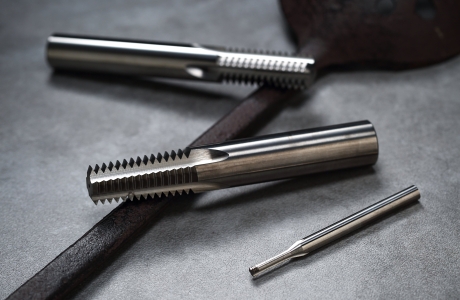

Rigid Tapping Solutions: How to Select the Right Tap for CNC Machining
A practical guide to choosing taps engineered for synchronized spindle-feed machining.
As modern manufacturing moves toward automation, high-speed machining, and unmanned production, rigid tapping has become the preferred threading method in CNC machining centers.
However, many manufacturers still use taps originally designed for general machine tapping or manual operations. This often leads to premature tool wear, tap breakage, poor thread quality, and unstable production.
Rigid tapping requires taps specifically engineered for rigid tapping conditions.
What Is Rigid Tapping?
Rigid tapping is a CNC threading process where spindle rotation and feed rate are synchronized electronically by the machine controller.
Unlike floating tapping systems, rigid tapping eliminates axial compensation and allows the machine to maintain precise synchronization throughout the threading cycle.
- Higher productivity
- Improved thread accuracy
- Better repeatability
- Reduced cycle time
- Fully automated production capability
Why Tap Design Matters in Rigid Tapping
During rigid tapping, the tool experiences higher demands than conventional tapping operations. Any mismatch between tool geometry, material characteristics, and machine parameters can result in excessive torque, unstable chip evacuation, and tool failure.
This is why taps developed specifically for rigid tapping often outperform general-purpose taps in CNC production environments.
Characteristics of a High-Performance Rigid Tapping Tap
Optimized Cutting Geometry
A rigid tapping tap must maintain stable cutting forces throughout the threading cycle. Optimized geometry helps reduce cutting torque, improve thread finish, and enhance process stability.
Superior Chip Control
Proper flute design ensures smooth chip flow, reduces chip packing, and lowers the risk of tap breakage, especially when machining stainless steel and alloy materials.
High-Quality Tool Substrates
HSS-Co taps are suitable for general CNC production, while solid carbide taps are recommended for high-volume production, difficult materials, and high-speed rigid tapping applications.
Rigid Tapping Tap Selection Guide
| Application Factor | Recommended Consideration |
|---|---|
| Material Type | Stainless steel, alloy steel, carbon steel, aluminum, cast iron, titanium |
| Hole Type | Through hole or blind hole |
| Thread Standard | Metric, UNC, UNF, NPT, BSP, or special thread forms |
| Production Volume | Prototype, small batch, or mass production |
| Machine Capability | CNC machining center with rigid tapping cycle |
Why Many Shops Upgrade to Rigid Tapping-Specific Taps
Manufacturers often switch to dedicated rigid tapping taps when facing frequent tap breakage, inconsistent thread quality, excessive downtime, or high tooling costs.
- Longer tool life
- Better process reliability
- Lower cost per thread
- Improved production efficiency
- More consistent thread quality
Engineered for CNC Rigid Tapping
Modern manufacturing demands more than general-purpose tooling. High-performance threading requires taps designed specifically for synchronized spindle-feed motion, advanced chip control, and long-term process stability.
Whether using HSS-Co or solid carbide solutions, selecting a tap optimized for rigid tapping can significantly improve thread quality, productivity, and overall machining efficiency.
Need Help Selecting the Right Tap for Rigid Tapping?
Share your material, thread specification, machine type, and production requirements. Our application specialists can recommend the most suitable tapping solution for your machining environment.
Rigid Tapping Solutions: How to Select the Right Tap for CNC MachiningTrusted by CNC Manufacturers Worldwide